
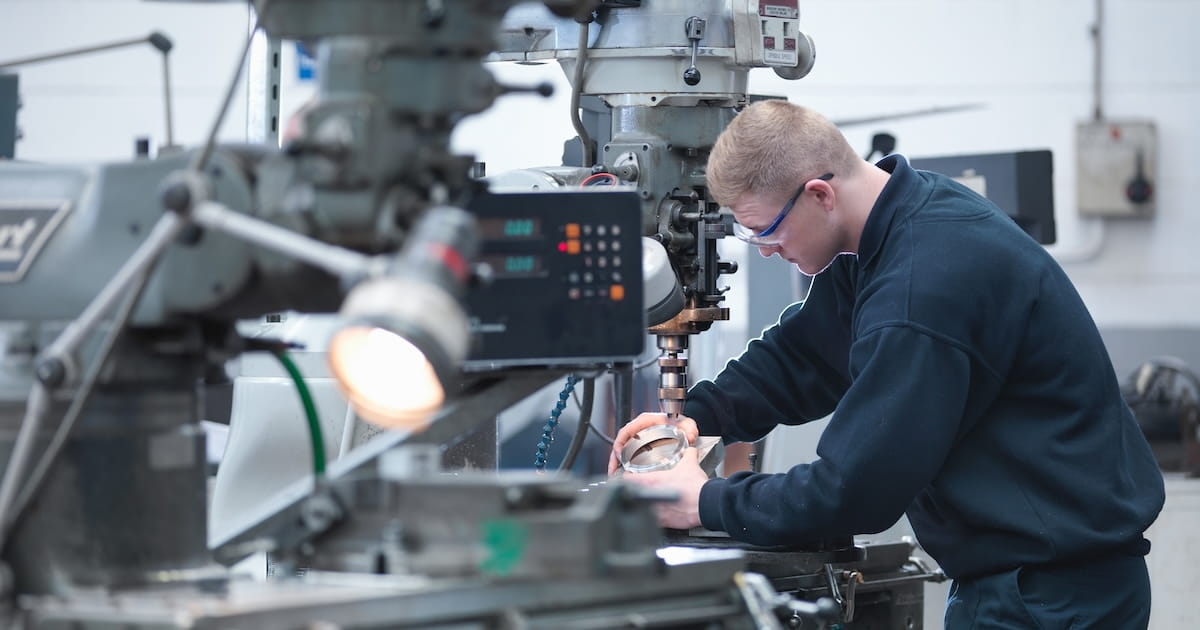
Most manufacturing companies are better than their websites
That's the reality. The operation is often highly capable, deeply experienced, operationally disciplined, and turning out excellent work every single day. But online? The company can look outdated, hard to understand, generic, or years behind where it actually is.
That disconnect matters more than a lot of manufacturers realize. Buyers research online now. So do vendors. So do the people you're trying to hire. And those impressions form fast.
Industrial marketing works differently
Most manufacturers aren't trying to become internet personalities. They're trying to build trust, strengthen visibility, support sales, improve how the company is perceived by potential hires, and communicate capability clearly. That calls for a different approach than the one built for ecommerce brands, startups, or consumer lifestyle companies.
Industrial buyers value credibility, clarity, operational confidence, and reliability. The marketing should reflect that, not work against it.
Most manufacturing websites fail in predictable ways
Usually the messaging is vague, the capabilities are unclear, the navigation is confusing, the mobile experience is weak, or the whole thing just feels older than the operation behind it. A surprising number of manufacturing sites still lead with something like "Providing quality solutions since 1987." That tells a buyer almost nothing.
Potential customers want to understand what you manufacture, who you serve, which industries you fit, what capabilities you actually have, and why they should trust you. And they want to figure that out quickly.
Manufacturing buyers research differently
Industrial buying is slower and more trust-driven than a typical consumer purchase. A buyer will review several vendors, compare capabilities, size up professionalism, and revisit your website more than once before they ever reach out. In fact, Thomas found that 73% of industrial buyers pay close attention to a supplier's website when evaluating them, more than market presence, brand reputation, or case studies.
That means the website becomes part of the credibility evaluation itself. It's especially true for regional manufacturers, specialized fabrication shops, industrial service companies, logistics providers, and B2B operators. The site should support confidence at every stage.
What actually works in industrial marketing
The strongest-performing manufacturers tend to do a handful of things consistently.
1. Clear capability positioning. The website should quickly explain what the company does, what industries it serves, what problems it solves, and where it genuinely excels. Specificity builds trust, especially in industrial markets.
2. Strong operational credibility. Buyers want signals of stability: certifications, facility quality, years of experience, process clarity, equipment, project examples, and plain operational professionalism. The site should communicate "this company knows what it's doing," and it should do it calmly.
3. Workforce perception. This one keeps getting more important. Potential employees, especially younger skilled workers, evaluate a manufacturer online before they apply. A weak digital presence can quietly signal instability, outdated systems, or a lack of professionalism, even when the actual operation is excellent. Strong manufacturing websites now support recruiting whether you intend them to or not.
4. Mobile usability. Buyers and operators increasingly check vendors on phones and tablets, while traveling, in meetings, on job sites, or between tasks. The site has to load fast, explain capabilities clearly, and work well on a small screen. Poor usability weakens trust immediately.
5. Local and regional visibility. A lot of industrial work is still geographically influenced. Manufacturers benefit heavily from local SEO and GEO visibility, regional authority, and industry-specific, GEO-friendly content, especially in regional markets where relationships and reputation carry real weight.
Why many manufacturers avoid marketing entirely
Because a lot of industrial marketing feels disconnected from operational reality. Manufacturing leaders hear buzzwords, abstract branding language, and tactics that sound irrelevant to the actual business, so they put marketing off altogether.
That creates a different problem. Competitors start looking more modern, visibility weakens, and the company gets harder to evaluate online. The strongest manufacturers usually aren't the loudest. They're the clearest.
The workforce challenge changing industrial marketing
A lot of manufacturers are now competing for skilled labor, younger-workforce visibility, and long-term recruitment positioning. That means the website affects hiring confidence, company perception, and workforce trust, not just sales. For regional manufacturers going up against larger metro employers, a professional digital presence helps reinforce that the operation is stable and worth joining.
Why regional understanding matters in industrial marketing
Manufacturing businesses in Southeast Missouri and the surrounding region operate differently than national brands. Relationships, operational reputation, and local workforce dynamics all play out differently here. Regional businesses tend to value responsiveness, practical communication, and direct accountability. The marketing system should reflect how industrial businesses actually operate locally, not lean on generic corporate language.
What manufacturers should actually measure
Usually qualified inquiries, RFQs, lead quality, local visibility, workforce engagement, conversion actions, and sales-support activity. Not vanity metrics. Industrial marketing should support measurable operational outcomes, full stop.
Why SEO and GEO matter for manufacturers now
Industrial buyers increasingly use Google search, AI-assisted search, ChatGPT, supplier research tools, and conversational search before they ever contact a vendor. That means manufacturers benefit from structured service pages, FAQ systems, clear capability explanations, strong local authority, and GEO-friendly formatting. The companies that communicate clearly online are becoming easier for both buyers and AI systems to trust.
What Smart Marketing believes about industrial marketing
We believe a manufacturer's website should support credibility, strengthen trust, improve visibility, and accurately reflect the operational quality of the company itself, not just "modernize the brand." In practice that means clear positioning, measurable systems, strong usability, local authority, and communication built around real industrial buying behavior. Most manufacturing companies already know how to do the work. The website just needs to say so clearly, and that clarity is measured against the Pays-Itself Promise. The look and feel comes from our Creative Design Group.
Frequently Asked Questions
What matters most in manufacturer website design?
Usually credibility, capability clarity, trust, usability, and strong operational positioning.
Why do many manufacturing websites underperform?
Often because messaging is vague, capabilities are unclear, or the site fails to communicate operational professionalism.
Does SEO matter for industrial companies?
Absolutely. Industrial buyers increasingly research suppliers online before they initiate contact.
Why is workforce perception important in manufacturing marketing?
Because potential employees often evaluate professionalism and operational quality online before applying.
What's the difference between industrial marketing and consumer marketing?
Industrial marketing is usually slower, trust-driven, operationally focused, and built heavily on credibility and expertise.
What is GEO in industrial marketing?
GEO helps manufacturers become more understandable and discoverable inside AI-driven search and answer systems.
Final thought
Most manufacturing companies don't need louder marketing. They need marketing that accurately reflects the quality of the operation, the professionalism of the team, and the credibility of the business itself. That's what buyers are evaluating online now. And increasingly, it's what decides who makes the shortlist.