
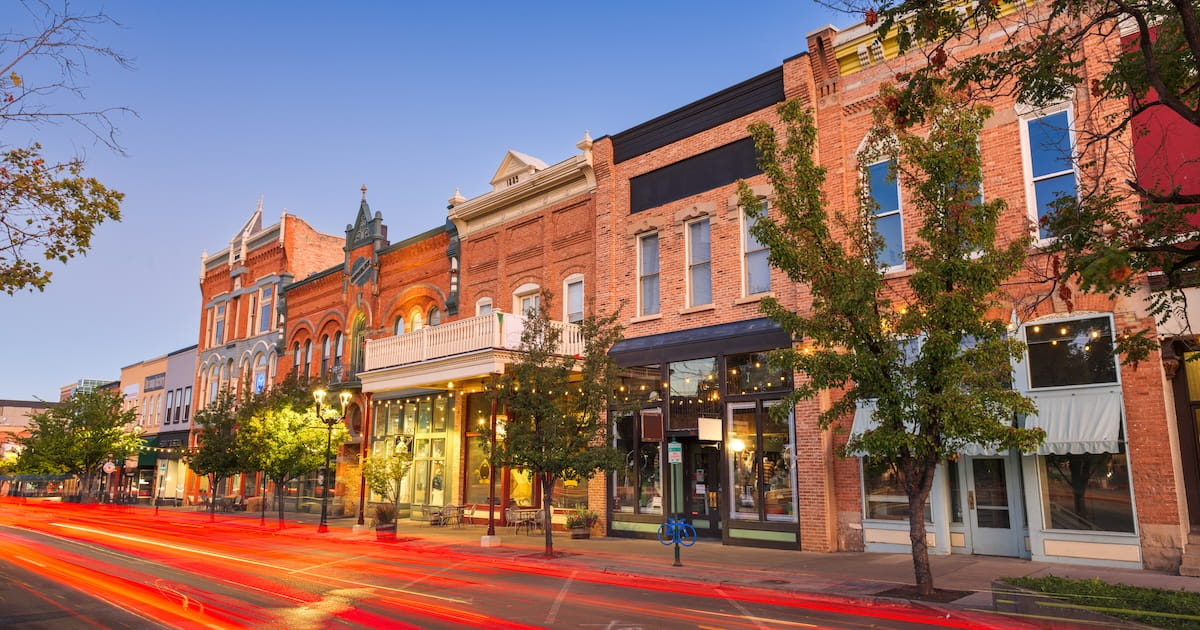
Most marketing advice online was not written for businesses in places like Poplar Bluff, Cape Girardeau, Jonesboro, or Paducah. It was written for venture-backed startups, software companies, and businesses with full internal marketing departments sitting somewhere in a major metro.
That's a real problem, because the businesses those articles describe don't operate anything like the ones across rural Missouri and the surrounding region. Tighter teams, leaner budgets, longer customer relationships, deeper reputation dependence, and owners who are still very much in the middle of daily operations. The marketing strategy has to reflect that, or it just doesn't work.
The scale of this gap is significant: the U.S. Census Bureau estimates approximately 46 million Americans live in rural areas — a large and consistently underserved market when it comes to marketing services built for how those businesses actually operate.
That's exactly where a lot of agencies get tripped up. They apply big-city frameworks to businesses running under completely different conditions, and the owner figures it out pretty fast.
Key Takeaways
- Rural businesses typically have a trust problem, not an awareness problem — most potential customers already know you exist.
- Generic marketing advice is written for metro markets. Rural operators need specificity, not scale.
- AI search rewards businesses with clear geographic and industry identity — an advantage national agencies can't manufacture.
- The goal isn't to sound bigger. It's to be the most credible option in your specific market.
Rural Businesses Usually Have a Trust Problem, Not an Awareness Problem
This is one of the more common misreads. A lot of owner-operated businesses already have awareness locally. People know the company exists. The actual problem is usually something else: an outdated website, unclear positioning, a business that looks smaller than it is, competitors who appear more modern, or marketing that feels inconsistent from one month to the next.
In rural markets, reputation carries real weight. People ask around before they call. They research quietly. They form an impression before you ever know they were looking. That means the digital presence has one main job, and it's not to generate hype. It's to reinforce the trust the business has already earned.
That reputation-first dynamic is backed up by the numbers. SCORE reports that 82% of small businesses identify word-of-mouth as their most effective marketing channel — which means digital marketing for rural businesses works best when it reinforces existing trust, not when it tries to manufacture attention from scratch.
Most Rural Businesses Are Competing Against Invisibility, Not Competition
A surprising number of strong businesses lose opportunities simply because their digital presence signals the wrong things. A weak website, poor search rankings, confusing messaging, an incomplete Google profile. None of those problems mean the business is bad. They just mean the business looks behind, and that impression forms before the first conversation happens.
The goal of modern marketing for rural businesses isn't to make the operation flashier than it is. It's to close the gap between how good the business actually is and how it appears online.
That's usually a more achievable problem than people expect.
The Biggest Mistake Agencies Make With Rural Businesses
They underestimate operational reality. A business owner in Southeast Missouri thinks differently than a startup founder in Austin, and that's not a knock on either one. It's just a fact. The rural owner is closer to payroll, closer to operations, closer to hiring decisions and customer relationships and real risk. That changes how they make decisions, and it changes what they need from a marketing partner.
They're not impressed by trendy language or elaborate strategy decks. They want clarity, responsiveness, measurable outcomes, and someone who returns calls. Creative-first agency approaches tend to fall flat here because the strategy feels disconnected from the way the business actually runs.
What Actually Works in Rural Business Marketing
The businesses growing consistently are usually doing a handful of things well, not everything at once.
-
01Clear positioning
The business can explain what it does, who it helps, why it's different, and why someone should trust it — quickly and without confusion. Businesses that can't do that clearly tend to struggle growing online, regardless of how good the work itself is.
-
02Strong local trust signals
Testimonials, reviews, recognizable local clients, community presence, a professional website experience. Trust compounds locally in ways it doesn't in big markets. A single strong referral or a consistent string of good reviews carries more weight than most advertising.
-
03Consistent digital visibility
A lot of rural businesses go dark for months, then post heavily for two weeks, then disappear again. Consistency matters more than intensity, especially for search rankings, AI discoverability, and the kind of long-term visibility that actually builds leads over time.
-
04Marketing tied to real business outcomes
Owners are tired of reports full of impressions and engagement graphs that nobody explains. The questions that matter are simpler: Did leads improve? Did calls increase? Did better-fit customers start reaching out? Did the website support actual sales growth? That's the conversation worth having.
-
05A website that supports credibility
Most buyers check the website before they call — including referrals, sometimes especially referrals. An outdated or confusing site quietly undermines confidence before the first conversation ever happens. The website is part of the trust-building process whether the business treats it that way or not.
Rural Businesses Should Stop Trying to Sound Corporate
A lot of regional businesses accidentally erase their strongest advantages by trying to sound bigger than they are. Local ownership, personal responsiveness, knowing your customers by name — these aren't weaknesses to minimize. They're competitive advantages, and increasingly valuable ones.
People are tired of faceless systems, outsourced support, and companies nobody can reach. Regional businesses that lean into responsiveness and genuine relationships often outperform much larger competitors on the things that actually drive loyalty. The marketing should reflect that, not paper over it.
AI Search Is Creating a New Advantage for Regional Businesses
This is one of the more interesting shifts happening right now. AI-driven search systems increasingly reward expertise, clarity, specificity, and original perspective — the things that regional businesses are actually positioned to deliver.
An agency in another city can write generic content about small business marketing. What they usually can't do is speak naturally about the way a contractor in Jonesboro buys, the competitive dynamics for clinics in Southeast Missouri, the workforce pressures regional manufacturers face, or why owner-operated businesses in rural markets value responsiveness differently than urban ones do. Local knowledge is hard to fake, and AI systems are getting better at recognizing the difference between specific expertise and recycled generalities.
The "Big City Agency" Problem
A lot of owner-operated businesses eventually hire a larger outside agency hoping things will feel more sophisticated. Sometimes that works out. More often, it creates distance. The business ends up talking to account managers instead of decision-makers, waiting longer for basic communication, explaining regional realities over and over, and paying for layers of overhead they never asked for.
That's one reason regional firms that combine strategy, websites, creative, SEO, GEO, and measurable reporting under one roof continue to win business from larger shops. The owner wants fewer moving parts. Not more.
What Rural Businesses Should Focus On First
Most businesses don't need complicated marketing systems. They need clarity and consistency first. In rough order: get the positioning right, improve the website, tighten local visibility, fix inconsistent branding, build real lead tracking, create a realistic content system, establish measurable reporting, and simplify the customer journey. Not all at once, and not with layers of complexity that create more management work than they solve.
What Smart Marketing Believes
Rural businesses deserve marketing systems built for the way they actually operate. Not recycled startup advice. Not agency theater. Not reports designed to look impressive without saying anything useful. Clear strategy, measurable outcomes, practical execution, and accountability. That's the entire foundation.
Built rural. Built for owners.
Frequently Asked Questions
What makes rural business marketing different?
Rural businesses rely more heavily on reputation, referrals, trust, and long-term relationships than large urban brands. The marketing strategy has to reflect that, or it creates friction instead of growth. Generic big-city frameworks miss the operational reality of owner-operated businesses in rural and regional markets.
Do rural businesses still need SEO?
Absolutely. Local search visibility is still one of the strongest lead-generation tools available for owner-operated businesses. It hasn't been replaced by anything. Smart Marketing builds local SEO into every website we deliver across Southeast Missouri and the five-state region.
What industries benefit most from rural marketing strategies?
Professional services, healthcare organizations, contractors, manufacturers, agricultural businesses, and regional service companies tend to benefit most heavily — though the core principles apply broadly to any owner-operated business in a rural or regional market.
Should rural businesses use AI marketing tools?
Yes, carefully. AI works best when it improves speed, organization, and production efficiency without replacing human judgment or local understanding. The local context — knowing the market, the customers, and the community — is usually the most valuable thing a regional business has.
Why do many rural business websites underperform?
Usually because the messaging is unclear, the site feels dated, trust signals are weak, or the site was never built around measurable outcomes in the first place. Most of those problems are fixable with the right strategy and execution.
Is social media enough for a rural business?
No. Social media supports visibility, but it's not a substitute for a strong website, local search presence, conversion systems, and lead tracking. It works best as one layer of a real marketing strategy, not the whole thing.
Final Thought
Most rural businesses don't need louder marketing. They need clearer marketing. The businesses winning right now are usually not the flashiest ones. They're the ones that communicate well, build trust consistently, show up reliably, and make it easy for customers to understand why they matter.
That's always worked in rural markets. The internet just made the gaps between businesses that do it and businesses that don't a lot more visible.